

There’s no such thing as a nice rich kid.
These opening words are the thoughts of 14-year-old Emery Hooper, freshman at the prestigious Derrymore Academy. Emery knows of what she speaks – adopted from Korea as an infant, she’s the cossetted only child of very wealthy parents. At Derrymore she’s surrounded by kids she’s known her whole life. And no, none of them are very nice.
Lilah tries out for Derrymore’s tennis team and quickly meets her enemy/rival/friend-to-be: Lilah Chang. Lilah is Tawainese-American, the daughter of middle-class immigrant parents who have strived and sacrificed to set Lilah up for academic success. Their sacrifices come with high expectations, though.
Emery, polished and self-assured (at least outwardly) immediately despises the awkward, dorky and slightly overweight Lilah. Lilah has a group of friends, all Taiwanese-American, but gravitates towards Emery despite Emery’s obvious disdain for her. Part of Emery’s dislike is based on a fear of being lumped in with the other Asian kids at the school; the idea of this threatens the story she tells herself about being (and being seen as) no different from her wealthy white peers.
Friendships at Derrymore are transactional and fraught with undercurrents of rivalry. Emery’s closest friends are Candace, who she’s known forever (Candace’s dad worked for Emery’s dad) and Noah, who is middle-class and sycophantic. It’s not just among the wealthy kids that unhealthy relationships flourish – Lilah’s friend group, derisively called the quadruplets by Emery and others, is dominated by Annie, who seems to have an inexplicable hatred for Lilah though they have known each other most of their lives and are ostensibly friends.
Emery plays a mean prank on Lilah, and her guilt over that leads to her softening a bit. This sets the tone for Emery and Lilah’s four years at Derrymore – a push away/pull towards, mirroring, in some ways, Emery’s consciousness of her privilege and the limits to it in her world. She eventually takes Lilah under her wing and makes her cool-adjacent, at least – loaning her clothes and makeup and folding her into her friend group.
But Emery can’t protect Lilah from micro- and macro-aggressions, any more than she can protect herself. The boys in their class think it’s funny to initiate a “Hug an Asian Day” and get angry when Emery takes offense on Lilah’s part. Emery has enough pull as an honorary white not to be subjected to the harassment, but she isn’t at all immune to the racism baked into the bricks of Derrymore: she has a run-in with a teacher who specifically wants Emery’s take on Korean “comfort women” in World War II, a confrontation that doesn’t end well for the teacher when the Hooper money speaks. Emery’s parents tend to be very anxious around any perception of racism against Emery, cushioning her rather than preparing her for the real world.
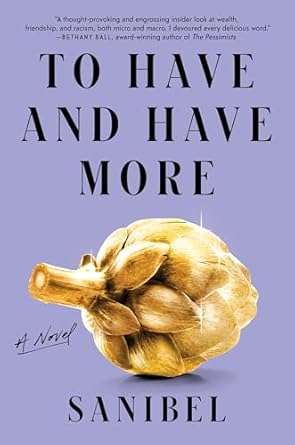
A blurb calls this book “darkly funny” but I didn’t feel quite on the same wavelength as the humor. Not only are most of the teen characters kind of awful in one way or another, the parents are, at the very least, highly flawed – Emery’s parents are snobby and overly concerned with her maintaining her precise place in society, and Lilah’s parents (and some of the other Asian parents depicted in passing) are hyper-critical and obsessed with image, in a different way than the white parents. Annie’s mother, for instance, urges her to continue to use skin-bleaching creams that burn her face, so she can look more like Lilah. “So white. So pretty.” (To be fair, Lilah’s parents appear more in the book than any other adults, and the reader does get a deeper sense of them as people; they certainly aren’t bad people.)
Emery and Lilah’s on-and-off friendship takes a turn towards “off” as tensions rise. Lilah founds a student magazine that examines some of Derrymore’s shortcomings, and her resulting not-Emery-engineered popularity makes Emery jealous, a heretofore unknown dynamic in their relationship. Emery spends the summer before senior year working with a tutor on her college application essay – the pressure to find some challenge that she has overcome to write about makes Emery deeply uncomfortable. She’s aware that nothing in her privileged life qualifies, but at the same time she can’t bring herself to really examine some of the challenges she’s faced as a transracial adoptee in a very white world.
The ending was, for me, unexpectedly bitter and cynical. It was sad because there were real moments of connection between Lilah and Emery – Emery spends one summer with Lilah and her parents in Taiwan, and she becomes, for a short time, a better person (which is not to say that the dynamic is Lilah=good, Emery=bad; just that her flaws were well mitigated by being exposed to Lilah’s world). Lilah, too, allows herself to manifest four years worth of resentment towards Emery. Early in the book Lilah is strangely passive about Emery’s treatment of her, but by the end she convinces herself that Emery has wronged her and used her for their entire time at Derrymore. To be fair, Emery does betray Lilah’s trust but it almost feels like Lilah is looking for a reason to break with Emery once and for all.
My overall grade for this was a B – if I didn’t connect with it on every level, I did find it really readable and think it had some smart things to say about the world that Emery and Lilah inhabit. I will definitely keep an eye out for future works by the author.
Best,
Jennie
AmazonBNKoboBook DepositoryGoogle
Related

Jennie
has been an avid if often frustrated romance reader for the past 15 years. In that time she’s read a lot of good romances, a few great ones, and, unfortunately, a whole lot of dreck. Many of her favorite authors (Ivory, Kinsale, Gaffney, Williamson, Ibbotson) have moved onto other genres or produce new books only rarely, so she’s had to expand her horizons a bit. Newer authors she enjoys include Julie Ann Long, Megan Hart and J.R. Ward, and she eagerly anticipates each new Sookie Stackhouse novel. Strong prose and characterization go a long way with her, though if they are combined with an unusual plot or setting, all the better. When she’s not reading romance she can usually be found reading historical non-fiction.
kebo88 | kebo88 | kebo88 | slot gacor | slot gacor | slot gacor | kebo88 | slot gacor | kebo88 | slot gacor