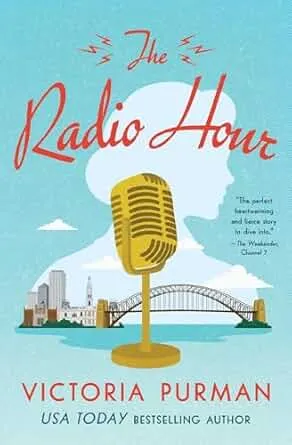


Martha Berry is on the brink of fifty years old, unmarried, and one of an army of polite, invisible women who go to work each day at the country’s national broadcaster and get things done without fuss, fanfare, or reward.
When the network prepares to launch a new radio serial in the style of their longest running and most successful show, Martha is transferred to assist the newly hired Quentin Quinn, the man who will write and produce the drama. But Mr. Quinn is wholly unprepared and ill-equipped for the role, clueless about radio and work in general. He’d rather enjoy his cigarettes and imbibe over lengthy lunch breaks and cannot be bothered to call his secretary by her correct name.
Rather than see the new show canceled, Martha steps in to hire a cast and write the scripts for the new show. Her authentic, women-focused storyline snags an ever-growing audience of loyal fans—and causes a stir with management. And Quentin Quinn is more than happy to accept the credit. But Martha’s secret cannot remain hidden. All too soon she faces exposure and must decide if she will politely remain in the shadows—or boldly step into the spotlight.
The Radio Hour is at once a sharp satire exposing the lengths men once employed to keep women out of the workplace and a hopeful tale about how one woman proves her worth and unwittingly outsmarts them all.
CW/TW – large amount of period misogyny, attempted sexual assault, mentions of past sexual assault. Smoking, drinking.
Dear Ms. Purman,
Yes, I noticed that this book about women’s workplace struggles in 1950s Australia is being touted for readers who enjoyed “Lessons in Chemistry.” But I want to tell potential readers that Martha Berry is nothing like the character of Elizabeth Zott so that they can adjust their expectations about what they’re going to get here.
Miss Martha Berry is a 50 year old Sydneysider who has worked at ABC, the national radio broadcaster, since 1932. She’s a competent and polite secretary and has been basically overlooked for her whole career there, being moved from boss to boss as needed to fill in. But now she’s been assigned to a fresh young new “wizz kid” who is going to be producing a new serial radio drama. The hopes are that “As the Sun Sets” will grab onto the tailcoat of the perennial favorite show “Blue Hills” by being aired just after it.
Martha is thrilled at the idea of helping with this show but soon realizes that boss Quinn is an idiot and if she doesn’t start doing the necessary things to get a radio show ready, it’s not going to happen and that she might be tainted with the brush of its failure. Soon Martha is doing everything necessary as well as covering for Quinn’s lengthy “liquid lunches.” When the day to start recording creeps closer and Quinn still hasn’t written even a page of dialog, Martha takes over that, too. Soon she’s pouring all of herself, as well as women’s and immigrant’s issues, into the drama of a working class family in Sydney. But can she keep hoodwinking Quinn, other co-workers, the radio actors, as well as her mother and her friends?
I like Martha very much. She is a product of her time and the way women were brought up and seen in the early part of the 20th century. An unmarried woman is very much seen as a “pitiful spinster” and if she must have a job, then a secretary or teacher is about the best she can hope for. Oh, and if the men come flooding back from war, they ought to have any jobs available to support their families – never mind if Martha and her widowed mother need to support themselves. Don’t forget that where Martha works, at the national radio broadcaster, if a woman gets married, she’s let go.
The radio aspects of the plot are fascinating. An actor’s voice is, obviously, far more important than looks and Martha knows just who ought to be on the show. She loves the idea of the plot revolving around working class Sydneysiders and is soon churning out scripts that begin to capture the attention of people across the country as they can see themselves in these characters. Martha also daringly includes some women’s health and safety issues, such as “The Change,” that bring the manager to apoplexy. You can’t say menopause on the air! The letters that pour into the station from listeners who voice that they love all of this and bemoan how society and their doctors have treated their concerns, is heartwarming to Martha and the fact that the bosses’ wives love all this as well allows Martha to keep including more.
What I don’t like as much is how the rest of the book sounds as if it’s also a radio drama. This could very well be the intent but much of it comes across as cliched and very heavy-handed. A problem women face is mentioned and then some aspect of the character’s lives will address that. It’s mentioned that women who get married must leave their job there so of course a secretary Martha knows has this happen to her. Male doctors hand-wave away women’s health complaints so of course Martha feels sick, doesn’t know what is wrong, and has a doctor treat her this way. Women face handsy men in the workplace so of course there’s a notorious one there.
Martha becomes a mother hen to three new female hires and mentally calls them the twee “Calendar Girls” as their names are April, May, and June. Since they’re usually mentioned this way, eventually I came to see them as one three headed character. It’s a stretch for me to believe that these women would have immediately turned to much older Martha for advice on everything and have hung on Martha’s every word. Most of the characters are either wonderful or awful with little in between. I also find it hard to believe that, boozy and inebriated as Quinn is, he wouldn’t have realized that Martha is writing all the scripts but okay, that’s the gimme for this book.
There is also a lot of telling. As we learn about Martha’s past, there are paragraphs after paragraphs that detail her working class upbringing and, in another chapter, her missed chances for romance. These parts make the book drag in places. Since Martha does not have an “I am woman, hear me roar” personality, we watch her being dismissed and overlooked by male bosses and learn that she was once groped by someone at work, reported it, and had her complaints dismissed. Yeah, lots of misogyny here but this was reality then.
I appreciate that the book is from a woman’s POV, shows women’s issues then (and sometimes now), and has a woman triumphing over all the cards stacked against her. The historical research is well done even if it’s sometimes very obviously inserted into the narrative. I just wish that it started faster and that most of the characters had a bit more shading to them and that all the men weren’t either clueless idiots or misogynistic arseholes. Parts of the book are very engaging but sadly others are a bit boring and predictable. C+
~Jayne
AmazonBNKoboBook DepositoryGoogle
Related

Jayne
Another long time reader who read romance novels in her teens, then took a long break before started back again about 25 years ago. She enjoys historical romance/fiction best, likes contemporaries, action- adventure and mysteries, will read suspense if there’s no TSTL characters and is currently reading more fantasy and SciFi.
kebo88 | kebo88 | kebo88 | slot gacor | slot gacor | slot gacor | kebo88 | slot gacor | kebo88 | slot gacor