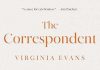
From the New York Times bestselling author of Ninth House, Hell Bent, and creator of the Grishaverse series comes a highly anticipated historical fantasy set during the Spanish Golden Age
In a shabby house, on a shabby street, in the new capital of Madrid, Luzia Cotado uses scraps of magic to get through her days of endless toil as a scullion. But when her scheming mistress discovers the lump of a servant cowering in the kitchen is actually hiding a talent for little miracles, she demands Luzia use those gifts to better the family’s social position.
What begins as simple amusement for the bored nobility takes a perilous turn when Luzia garners the notice of Antonio Pérez, the disgraced secretary to Spain’s king. Still reeling from the defeat of his armada, the king is desperate for any advantage in the war against England’s heretic queen—and Pérez will stop at nothing to regain the king’s favor.
Determined to seize this one chance to better her fortunes, Luzia plunges into a world of seers and alchemists, holy men and hucksters, where the line between magic, science, and fraud is never certain. But as her notoriety grows, so does the danger that her Jewish blood will doom her to the Inquisition’s wrath. She will have to use every bit of her wit and will to survive—even if that means enlisting the help of Guillén Santangel, an embittered immortal familiar whose own secrets could prove deadly for them both.
I GOT THE BOOK FROM THE LIBRARY
Dear Leigh Bardugo,
This was a strange reading experience. I have read one book by this author before (The Six of Crows) which I liked well enough, but not enough to finish that duology. But this blurb tempted me because of the Jewish roots of the main character and because the action was taking place in Spain and it was happening almost a century after Spanish rulers decided that Spain would be better off without Jewish people, without my people. Leave, convert to Christianity or die. Nice choices, whole lot of them, right? And often die even if you convert, because obviously converted Jewish person cannot become a “true Christian” as one of the characters remarks with bitterness.
Of course I was interested in Luzia’s fate. Luzia is a servant in one of the noble houses and she lives a very hard life and does everything to survive. Apparently Luzia also has a gift for magic. Why? She just does. At first we see that she does little things to help herself and others in the household chores (like make the burned bread NOT burned), but then it is slowly revealed that she is capable of doing more (certainly not everything, but more than just household magic).
The blurb describes the set up very well, I would just take an issue with the “scheming mistress” part. I mean, yes, her mistress wanted to discover what else Luzia could do after she witnessed something, but I would argue that Luzcia was being an idiot by revealing even a scrap of her abilities to her mistress in the first place and placing herself in danger. Turned out at the end that her mistress was not being the worst of them either, to me anyway.
But yes, eventually Luzia gets the attention of some people whose attention she should not have courted at all if you ask me. Oh, I understand she wanted a better life for herself and that is how she entered that “magic tournament” which she badly wanted to win, but yes, I think she had the right idea to run away in the beginning of the book. Too bad she did not follow through, if you ask me.
Yes, I know there were circumstances as to why she changed her mind, I am just convinced that she should have changed her mind back.
I am so conflicted about this book. I know it is the 16th century and all that and I know women were in vulnerable positions, I get that, but besides Santangel there was no other male character who had some decency in him and I would argue that at best Santangel was a very flawed character. Do not get me wrong – the women in this book are not all angels or anything like that, most of them were actually quite flawed, like people often are. Men? Not so much in my opinion. I don’t care for this sort of thing.
Also, Luzia has magic, great, not the most unique sort of magic, but beautiful and very strong. Just where does it come from? Why does she have it? All a mystery? I would also argue that the magic she performs at the end could only come from the divine but there is no suggestion about her being a prophet or anything like that.
Also, there is a romantic storyline which, sadly, bored me a lot. It just did. I could not understand Santangel’s appeal after he appeared in the story (it felt creepy) and then I just did not see any chemistry between him and Luzia. I just did not feel emotional attachment to any of them.
The character I felt for the most was Luzia’s aunt. I also have to say though, I may not have particularly cared for Luzia, but I did appreciate that she was a strong woman who acted as a woman from another era, she did not feel as a woman with a brain from the 21st century. These days I appreciate such a thing a lot.
Grade: C/C-
AmazonBNKoboBook DepositoryGoogle
kebo88 | kebo88 | kebo88 | slot gacor | slot gacor | slot gacor | kebo88 | slot gacor | kebo88 | slot gacor